
Sue Creek’s famous Pottery Farm
By Jackie Nickel (2019)
Perhaps the most famous resident of the Back River Neck Peninsula in the 1800s was Peter Hermann, a potter. An immigrant from Germany, he arrived in the United States in 1847 and became a U.S. citizen in 1851, according to research by Ballestone Preservation Society members. Hermann soon owned and operated a well-regarded pottery business in East Baltimore. Then in 1881, attracted by its fine white clay, he purchased a farm on Back River Neck.
Hermann soon moved to the land on the shores of Sue Creek where he continued to make pottery and the road to his home became known as Pottery Farm Lane. Hermann’s pots, jugs and pitchers were used to hold milk, cheese, sauerkraut, pickled vegetables, wine, cider vinegar, and whiskey. His pottery farm was one of the finest on the Eastern Seaboard and his craftsmanship was impeccable, thanks in part to the site’s excellent raw materials.
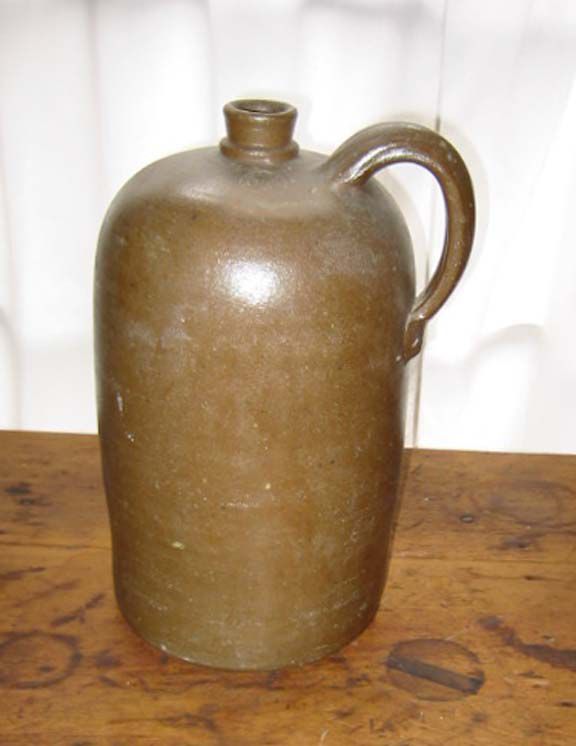
Hermann’s surviving works of art are of great significance as both art and history. Ballestone Preservation Society is proud to have a jug by Peter Hermann in its collection.
After changing hands several times over the years, in the 1980s the 89-acre tract known as Pottery Farm was on the verge of being developed into a townhome community. Encouraged by Back River Neck Peninsula Community Assn., which successfully fought the development, the land was acquired by Baltimore County Dept. of Recreation and Parks in 1989. Half of the $1.8 million purchase price was from Maryland Open Space Program which mandated Pottery Farm become parkland.
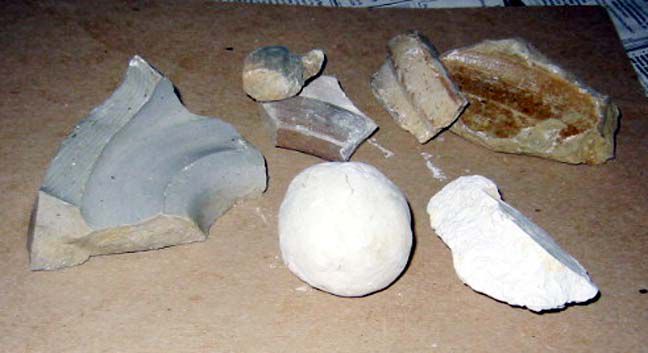
Many shards of pottery were found along the shore in the days before the land officially became a county park. In the early 1990s, a high school teacher made a dig with some students at Pottery Farm. From shards that they found it was determined that indeed Peter Hermann had worked there. The teacher contacted the state and was instructed to discontinue the dig because he was not a professional archeologist.
Peter Hermann’s wares continue in popularity with collectors and some have been on display at the Smithsonian Institution.
Pottery Farm History
By The Ballestone Preservation Society
Local Tuscarora Indians originally settled this property. They named the area “Paradise” because of its unique features, which included a natural port and rich fertile farmland. These peaceful Indians were farmers who grew maize, tobacco, pumpkins, and squash. They supplemented their diets with vast amounts of fish and game, which inhabited the area at that time. They traded crops, fish, game, and pottery with other Indians and white settlers who lived along “Middle River” and the Chesapeake Bay.
The waterway took on the name “Sue’s Creek” after a two year old girl named Sue accidentally drowned during the nineteenth century. She was buried in the family cemetery near where Chesapeake High School is located today.
Perhaps the most famous resident of this property was Peter Herrmann, a potter from Germany, who arrived in the United States in 1847, became a U.S. citizen in 1851 and owned and operated a pottery business in East Baltimore until 1888. In 1881, he purchased this farm on which to make his pottery and the road leading to it became known as Pottery Farm Lane. His crocks, jugs, and pitchers were used to hold milk, cheese, sauerkraut, pickled vegetables, wine, cider, vinegar, and whisky. His pottery farm was one of the finest on the eastern seaboard and his surviving works of art are very valuable to this day.
In 1989, this 89-acre tract of property known as “Karol’s Landing” was acquired by Baltimore County’s Department of Recreation and Parks for $1.08 million, $900,000 of which was derived from the Maryland State Program Open Space Funds.
Pottery Farm
By Marion MacCrehan
Mr. Ken Hawkins, a teacher from Chesapeake High School, with some of his students conducted a dig in Pottery Farm in the early 1990s. From shards that were found, they were able to verify that it was indeed Peter Herrmann who had operated the pottery located there. Mr. Hawkins notified the state of his find, and because he was not a professional archaeologist, he was told not to do anymore digging in the park.
Peter Herrmann had moved his pottery manufacturing from Baltimore City to Baltimore County because he was in financial trouble with laws regulating the excise tax. There he had access to the city via water, and at the pottery farm park location, continued to make pottery. His wares were of good quality and have been on display at the Smithsonian.
Because Mr. Herrmann owed money, he put the property he owned in his lawyer’s name. When Herrmann died, the lawyer got the land and he, in turn, handed it on to his daughter. She later sold the land.
Dorothea A. Gross, who edited “Ragtime Granny – Memoirs of Amelia S. Herrmann,” resided in a nursing home as of August 21, 1997.